Reversing Basic c++ Templates
 Thuri
ThuriIn this exercise you will need to reverse engineer a binary, research different functions, and understand if the functions are part of a template or not.
NB: Decompilers are not permitted, please use only static reverse engineering during this lab.
The lab can be downloaded at the following link CalcNum lab
What is a C++ template?
A Template is a c++ entity that accepts different data types but performs the same functionality. The data types are passed as template parameters to template function so that we don’t need to write same code functionality for different data types.
Lab Analysis
For solving the questions, I used an approach of first reading questions and then reverse engineering those functions only. This ensured I only reversed functions important to our analysis.
Question 1
Which of the the following functions are part of the same template?
For reverse engineering we will focus on the following functions, 0x1229, 0x1620, 0x1342, 0x15fa, and 0x1245 in order to answer the first and subsequent questions.
The first step to manually reverse functions and understand what each function is doing. For analysis I will be using IDA Pro freeware.
0x1229 Function Analysis
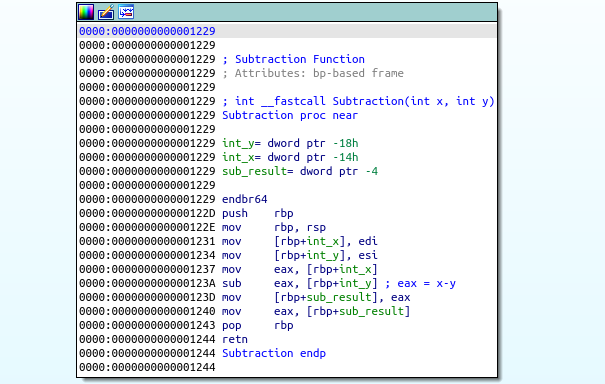
Looking at the function as shown in image above, it accepts two parameters of type int and does Subtraction (assembly instructionsub) of local variables x and y ant then returns the result. The return value is of type int, therefore we can set type of our function as shown in the image above.
0x1620 Function Analysis

From the analysis of this function, it accepts two parameters of type long and finds the maximum value between the two. The two parameters are compared through use of jge assembly instruction as shown above.
0x1342 Function Analysis
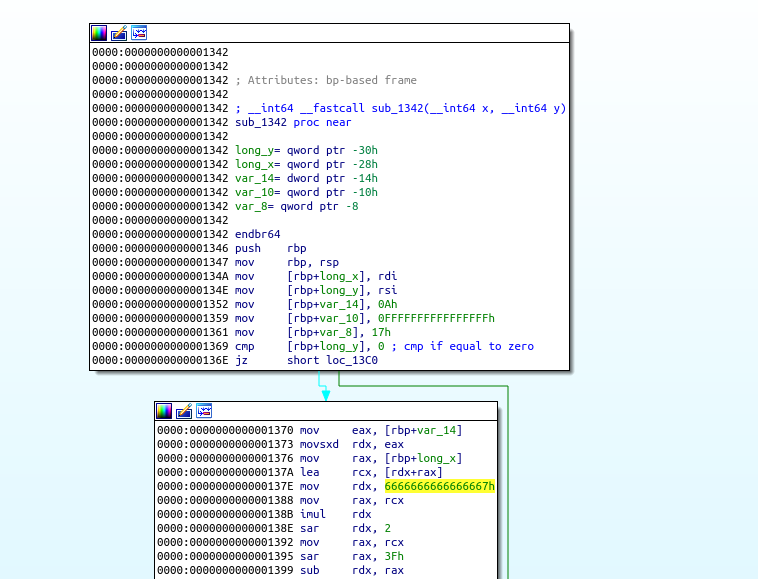
The function accepts two parameters of type long and checks if one parameter is equal to zero. If the value is not equal to zero, it does math and bit operations.
0x15fa Function Analysis

From the analysis of this function, function accepts two parameters of type int and finds the maximum value between the two. The two parameters are compared through use of jge assembly instruction. Therefore the maximum value is returned by the function.
0x1245 Function Analysis
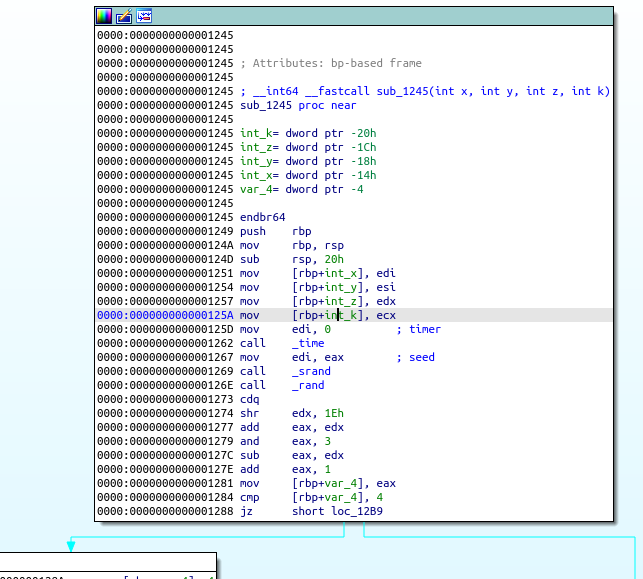
This function takes four parameters of type int and does further bits operations as shown in the disassembly code.
From the above functions analysis, only two functions qualify as templates. 0x1620 and 0x15fa are templates functions because they perform the same functionality( Finding the Maximum value) and number of parameters passed to each function are the same.
Question 2
Review the function at address 0x12C5 and other functions in the binary. Is this function a template function?
0x12C5 Function Analysis
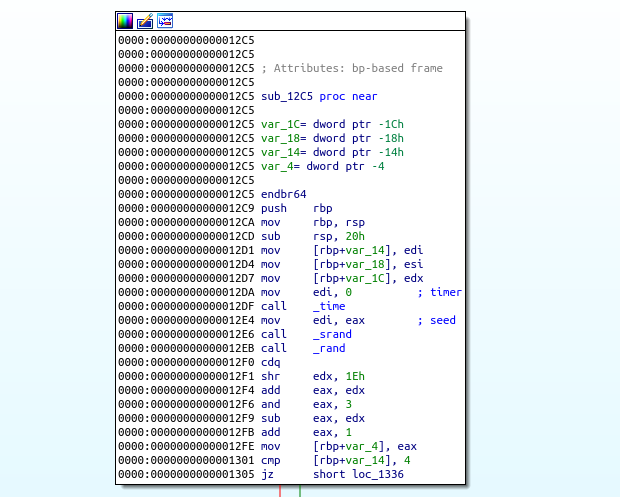
This function does the same functionality as the function 0x1245, but the difference is the unequal number of parameters passed to each function.
Therefore, it does not qualify as a template function.
Question 3
Review the function at address 0x15cc and the function at address 0x15fa. Are these functions part of the same template function?
0x15cc Function Analysis
This function is used for calculating minimum value of the two parameters passed to function.
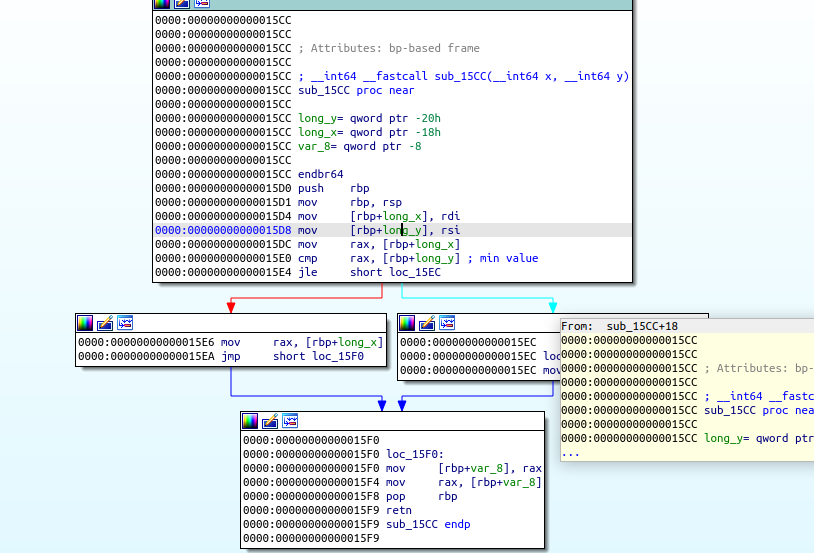
The two functions are not of the same template function. This is because one is used for calculating the maximum value and other one for minimum value. The difference between the two is jge and jle conditional assembly instructions as shown in IDA disassembly above.
References
- C++ Templates Basics - https://m.cplusplus.com/doc/oldtutorial/templates/